

Best Exercises to Build Muscle (And What Actually Matters for Muscle Growth)

What are the best exercises to build muscle?
The truth is, there is no such thing as a single "best" exercise.
There is also no single best workout program, and no magical set-and-rep scheme.
So then, how does someone go about building muscle?
What matters is following proven muscle-building principles consistently over time.
So by following a program that applies those principles, you'll be able to build muscle.
In this article, you’ll learn exactly what those principles are, how to apply them, and how to structure your training, nutrition, and recovery so you can build muscle efficiently and sustainably.
How to Build Muscle: The Principles That Matter Most
Building muscle isn’t about doing more exercises — it’s about doing the right things consistently. The following principles are what actually drive muscle growth.
1. Adherence: The Most Important Muscle-Building Factor
You could have the PERFECT training program, with the ideal exercises, sets, reps, rest times, and schedule.
The program is excellent on paper, but if you don't stick to it — if you're not consistent in following it as written — you won't see results.
That’s why adherence is the most important part of any muscle-building program.
So what will help you adhere to your program?
The first thing would be your schedule. This is why everyone's program should be tailored to their individual needs.
Your program should fit your schedule.
First, you need to ask yourself:
How many days per week can you realistically train?
How much time do you actually have to train per session?
I ask my clients this before designing their individualized program.
Because if you get a program that requires you to train at 5 a.m. 6 days a week, but you have an 8-month-old, then this program isn't realistic for you.
Or if you get a program that requires you to be at the gym for 2 hours, but you only have time for an hour workout, then this program isn't the best one for you because your adherence will suffer.
As you can see, if you can't realistically stick to your program because it doesn't fit your schedule or lifestyle, you won't be consistent, and therefore you won't see results.
A program should be designed around your life, not the other way around.
A good muscle-building program allows flexibility.
If it's truly tailored to you, it should take that into account. For example, if you normally train Monday, Wednesday, and Friday, but need to move Friday’s workout to Saturday, that should be fine. Or if you only have 45 minutes instead of 90 mintues, your program should be adjustable, without losing effectiveness.
As long as you remain consistent, you can still build muscle.
Next ...
2. Training Intensity: How Hard You Work Matters
To build muscle, your body needs a reason to adapt.
That means your workouts must be challenging.
This doesn't mean you have to workout more days a week, nor does it mean you have to spend more time in the gym.
Now, what you need to do is work hard. You'll need to push yourself.
It requires higher-quality effort during your working sets.
If you continue to go to the gym and lift the same weight with the same reps every time, you won't make any progress.
I explain it to my clients like this: using a 1-10 effort scale (1 being extremely light and 10 being very heavy, feeling impossible to lift). For muscle growth, you want your working sets to be at an effort level of 7 or higher. You want to feel like you might have been able to do
1-3 more reps still, but no more.
That's how you know you're working hard.
Keep in mind that, if you can easily hold a full conversation while lifting, you’re likely not training hard enough to stimulate muscle growth. You're just going through the motions.

3. Training Frequency: How Often Should You Lift Weights?
Training frequency refers to how many days per week you train — and how often each muscle group is worked.
This is where your schedule comes into play when choosing your training split.
The number of times a week you train each muscle group and each movement pattern matters.
To build muscle, you'll want to train 3 to 5 times a week.
If you're a beginner, you can build muscle by training a minimum of 2 times a week at the beginning.
Typically, 3 to 5 times a week is the ideal frequency.
Training within this range allows enough stimulus for muscle growth while still giving your body time to recover.
Now let's talk about your actual workout program and the exercises that make up your program.
4. The Best Exercises to Build Muscle
While there’s no single ‘best’ exercise to build muscle, there are exercises you should prioritize for muscle growth.
Prioritize compound movements. Compound exercises work multiple muscle groups at once and allow you to lift heavier weights over time, making it easier to progressive overload.
For example:
Bench Press works your chest, shoulders, and triceps.
Squats and Lunges work your quads, hamstrings, and glutes.
Deadlifts work your glutes, hamstrings, and back.
Rows and Pull-Ups work your back and biceps.
Overhead Press works your shoulders and triceps.
Because compound lifts involve more muscle mass, the more weight you can add and progressively overload, the more they provide a stimulus for muscle growth.
Compound movements should go at the beginning of your program, when you’re the freshest and can apply the most effort.
5. What Not to Do If You Want to Build Muscle
Avoid these common mistakes that slow progress.
Combining two exercises. Such as a lunge with a bicep curl or a squat with an overhead press. You'll be able to lunge and squat more weight than you can curl and overhead press, so you'll be limiting your progress.
Program hopping. Changing exercises every workout prevents progressive overload. Stick to your program.
Chasing “muscle confusion.” The idea of "muscle confusion" sounds cool, but in real life it just keeps people spinning their wheels. It is important to keep consistency throughout your training. Stick with the same core lifts for 4–12 weeks so you can track progress and get stronger.
This brings me to my next point ...
6. Track Your Progress to Build Muscle Faster
If you want to know whether your program is working, you need to track your workouts. And if you keep the same movements, you can actually keep track of your progress.
Tracking allows you to see:
Strength increases
More reps or sets completed
More weight lifted
Improved technique
All of these are signs of progressive overload, which is essential for muscle growth. And tracking your progress is the easiest way to know if you're training hard enough to build muscle.
That's why following a program is important. It will lead you to create the stress your body needs to adapt to, and then see results.
You can track your workouts using:
A notebook
Your phone’s Notes app
Whichever is easiest, just track.
If you're working with a coach, they should have a way you can both keep track of your progress. I use CoachRX with my online clients.
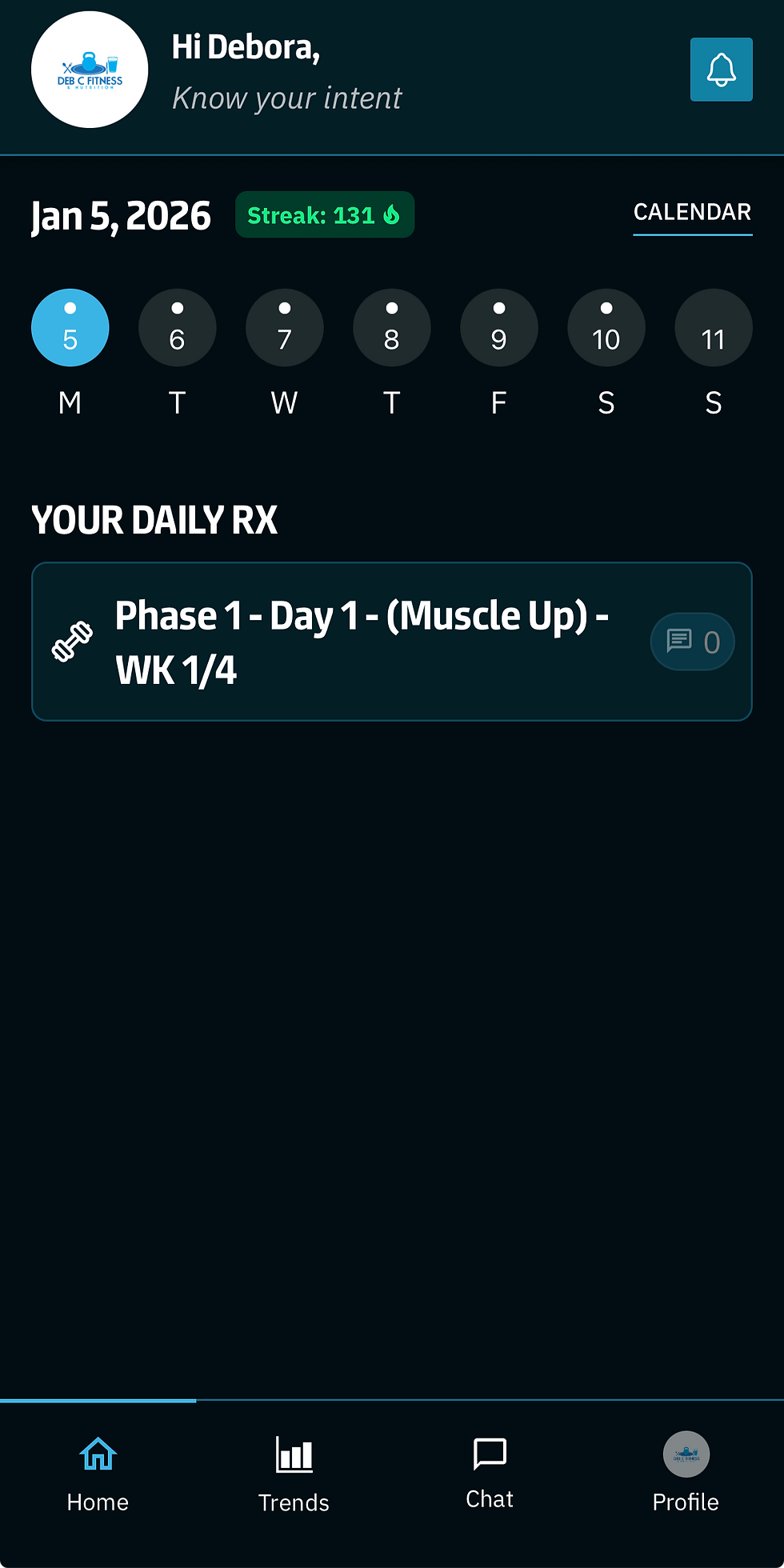
This way, you can see what you did the previous week, the reps, the sets, the weight, and see how you can improve that the following week.
If you're able to improve your performance week by week, you're making progress. Those numbers don't lie.
7. Rest Periods for Muscle Growth
Rest periods are often underestimated.
If your goal is muscle growth, 30-second rest periods are too short.
I repeat, you need to rest for more than 30 seconds if you're goal is to build muscle.
If you're actually working hard and pushing yourself in your working sets and on a scale of
1-10, your intensity is truly a 7 or higher, your muscles will need time to recover before the next working set.
Proper rest allows you to maintain intensity across sets, which leads to better results.
So if you're thinking that your intensity is a 7 or 8 but you're ready for your next set after 30 seconds of rest, you're not lifting heavy enough.
Just because your rest times are really short doesn't mean you're working hard. You're actually doing the opposite. As you're not recovering between sets, you're not able to push yourself with the right intensity your body needs to actually build muscle.

So, how long should you be resting between sets?
Rest Time Guidelines
Compound lifts: 2–5 minutes
Accessory/isolation exercises: 60–90 seconds
Now, if you're doing supersets, the rest time can be structured differently.
Supersets are when you perform two exercises back-to-back. These exercises typically involve opposing muscles, like chest and back.
For example:
A1) Seated Cabe Row
A2) Push-Ups
Rest for 90 seconds to 2 minutes before performing your next set.
Or
A1) Seated Cabe Row
Rest for 1 minute
A2) Push-Ups
Rest for 60-90 seconds before proceeding to your next set.
Make sure you are resting during your rest periods. Avoid doing extra high-intensity exercises between sets. So you shouldn't be doing jumping jacks or burpees when you should be resting.
What you can do during your rest periods:
Walk around the gym to get your steps in.
Perform light mobility work.
Use the time to log your workout to ensure you're keeping track of your progress.
If you're following a program, you should adhere to the rest periods prescribed for you, especially if you're working with a coach who has designed your program. If rest periods are prescribed, follow them to ensure you get the results you want from your program.
8. Nutrition for Building Muscle
Now that we've talked about what your training program should look like, we need to talk about what your nutrition should look like.
Your training matters. How hard you work in the gym matters. And how consistent you are with not just your training program but also your nutrition matters. Because training alone isn’t enough, muscle growth requires proper nutrition.
Eat in a Slight Calorie Surplus
To gain muscle, your body requires the proper nutrients and additional energy to build muscle tissue. Especially if you're training hard in the gym, you need to give your body the correct resources it needs.
You do this by eating in a slight calorie surplus, meaning eating more than your body burns. By doing this, you'll be feeding your body what it needs to maintain itself, plus a little more to grow those muscles.
Keep in mind, this is a slight calorie surplus. It isn't free range to eat everything in sight and go wild with pizza, cookies, cake, ice cream, etc.
You still need to focus on feeding your body nutritious food. You'll just be eating a little more of these nutritious foods.
A good starting range is:
200–500 calories above maintenance
This supports muscle growth without excessive fat gain.
Eat Enough Protein
The other part of your nutrition you should focus on is eating enough protein.
Protein provides the building blocks for muscle tissue.
Aim for:
0.7–1 gram of protein per pound of lean body weight
Calories and protein are the two most important nutrition factors for muscle growth. If you want to dive a little deeper, you can read this article A Simple Muscle Building "Toning" Guide.
9. Sleep, Recovery, and Rest Days
Muscle is built during recovery — not during your workouts.
Sleep for Muscle Growth
Muscles need sleep to grow. You break the muscle in the gym, and you recover and rebuild the muscle to grow bigger while you sleep.
Yes, you need to put in the work in the gym and give proper attention to your nutrition. But for this all to be effective, you still need to rest.
Getting 7–9 hours of sleep per night supports:
Muscle repair
Hormone regulation
Injury prevention
Efficient recovery
Chronic poor sleep can stall progress and increase injury risk.
I have an article you can read to learn more about How Sleep Affects Fitness: Weight Loss, Muscle Growth, and Overall Health.
Take Rest Days
Similar to sleep, rest days are crucial for building muscle efficiently.
Lifting weights 7 days a week isn't optimal. Doing more isn't better.
Nobody needs to strength train 6-7 days a week. Strength training 3–5 days per week is optimal for most people.
The other days are your rest days. This will allow your body to rest and recover from strength training.
Rest days don't mean you sleep all day or lie on the couch watching Netflix all day. You still want to move your body.
What you don't want to do is lift weights every day. Your body needs rest from lifting weights. Because if you don't, your body will get so tired, it will constantly be sore, you'll hit a plateau, you'll get injured, or you might just quit.
Doing some low-to-moderate-intensity cardio on days you don't strength train can actually enhance muscle recovery and growth.

Focusing on:
Walks
Hikes
Bike Rides
Light cardio
Mobility work
These are all great options for your rest days.
Recovery is essential for long-term progress. If you have 2-3 rest and recovery days a week, you’ll see better progress.
10. You Should Hire a Coach
There is a lot that goes into building muscle and creating an individualized program.
You might not be doing enough volume.
Your sets might not be intense enough.
You might be undereating calories, carbs, and protein.
You might not be tracking your workouts, so you don't really know if you're making progress.
You might not be doing the right exercises. (You definitely shouldn't be doing every exercise out there that you see online.)
You might not be resting and recovering properly.
You might be switching exercises and programs too often. (You need to stick with a program and with the same exercises long enough to see great results.)
Guided advice will save you lots of time. A coach removes the guesswork and helps you progress faster.
Final Thoughts: How to Build Muscle Successfully
There is no single best exercise to build muscle.
Building muscle isn't just about doing one thing. It's a lot of little things that help build muscle.
Muscle growth comes from:
Consistent training (Adhering to a program is the most important one.)
Challenging effort
Progressive overload
Proper nutrition
Quality recovery
When these pieces work together, results follow.
I hope you found this article valuable. If you've read all this, implement it, you will see amazing results.
Or if you want all the guesswork eliminated so you can show up, know exactly what to do, put in the work, and build muscle efficiently... then hire a coach. Hiring a coach is the most effective way to make progress.
I would love to help! It all starts with an initial assessment. I use an assessment-based approach. We assess first, then build a plan. This way we don't guess.
If you want a personalized plan that fits your lifestyle and goals, you can apply for 1-on-1 online coaching. I’d love to help you build muscle with clarity and confidence.
Thanks for reading!
Now let's build some muscle!
-Deb



Comments